FAQs

This is sample content

All TRADE

Both Standard and Exceptional terms and conditions exist in our shop and when ordering or doing business with Design By Nature.

  • Standard TnC’s are offered to consumers, customers and clients to protect your rights
  • Exceptional TnC’s provide cover for natural events, such as Moth, Poisons, Toxins and the particularities of the wildflower industry.

Link Terms n’ Conditions

Standard TnC’s

Exceptional TnC’s

Yes. we sell our products and services from the shop on this wildflower website.

If your unsure about what to order, use the Filters or Search this web, Try ‘Picker’ to find exactly what and how. There is even a map to show you where to see them grow

Our Minimum Order Value and Weights are:

Free Delivery by AnPost min’ order €30.00

Smallest Seed Mixture Packet amounts: 50g, if ordering one x seed mixture

Min’ Orders do not apply to the weight of individual small seed packets of single species. instead the economic value effects and post is charged if under €30.00

Buying seeds with us

We make ‘special offers’ online, on social and in our wildflower shop

Bulk seed discount:

  • Bulk discount, 5% off, starting at 5kg to 9.75 kg, see # below
  • 10 kg Upwards, please ask.

Plants and other products are not discounted

We Also  Offer Trade Discount:

  • Regular Buyers
  • Wholesalers

Settlement Discount: 28 days, 1.25%,
We charge EU+ interest rates after 30 days

No discount on amounts under 5 kilos.

#AnPost parcels 9.75 kilos max allowed. plus packaging = 10kg max allowed by Free post


We provide AnPost Tracking on all orders over €30.00

Visit AnPost/tracking.html link

On delivery we usually send you an email when posted. We do not send the tracking code unless reported by the buyer as late. (5 work days)

We rarely use couriers for delivery, if we do, they use their own tracking. Ask us for the code

If the delivery does not arrive in 5 work days please email info@wilflowers.ie, provide you name and contact details and any reference numbers or proof of sale. It’s sometime good to check direct with your nearest sorting office.

An Post delivery at Bank Holidays and special times of year can be extra slow. please be patient

Yes, we accept returns on seeds only, provided the inner seed package is unopened.

Plants and other products have specific terms and conditions.

Reasons for Seed Returns:

  • Damaged packaging
  • Wrong amount
  • Labeled incorrectly to your order.

We do not accept returns where the customer asked for a bespoke mixture or product. and is returning it for reasons of indecision.

Moth larvae need to be sieved out, we do not use chemicals in seed storage, Nor do we except returns due to Moths.

Returning Plants: Please contact us ASAP on arrival and opening if you are unhappy.

In all cases, late contact re returns will void your rights, notify us on arrival and early opening of outer packing material.


Starting Out

This is the FAQ answer. You can add text/images links etc. here if you wish and our developers will make this a full WYSIWYG editor field including media upload buttons. This is the FAQ answer. You can add text/images links etc. here if you wish and our developers will make this a full WYSIWYG editor field including media upload buttons. This is the FAQ answer. You can add text/images links etc. here if you wish and our developers will make this a full WYSIWYG editor field including media upload buttons.

No. but if you read LINK it show you how you can weaken the grass and sow a special mix in Autumn

Support

We Help You Grow Wildflowers – Terms and conditions apply.

The Very Best Support for Ireland’s Wildflower Growers to Create Flora and Ecology.

Provided you photograph every stage (before, during sowing and after new growth each year for 3 years) and have available those photos, when a complaint is made, we will replace your seeds and support your efforts provided you follow our instructions. Photo requirements and Guarentee full text.  LINK  xxx

(B2C) For Amateurs & Gardeners: 3 Year Free Support included in our Guarantee.

We cannot solve problems in small plots under 100 square meters, far too many variables and unknowns

If your starting out & cant manage a small plot, you wont be messing up a large plot now, will you?

Landscape Trade : 3 Year Free Support included in our Guarantee to your customers. LINK  xxx

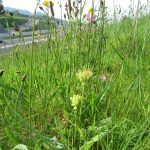
Wildflowers growing on a road embankment in Ireland

(B2B) For Ecologists to Gov’ alike: Free 10 year Support if a species based nature restoration project.
Guarantee: 5 years on seed mixtures.

Landscape Design and Landscape Architecture: Free 7 year Support.
Guarantee: 5 years on seed mixtures.

Restoring Ecosystems, Re-Naturing and Directly Saving Species

No other Seed Company offers Free Support and a 3 – 5 year Guarantee

Few fail with our advice and seed products, so the Guarantee adds no cost,

Our ‘just’ trade – Saves you from the dreaded failure embarrassment

Wildflower Glossary

Can ‘Old’ seed be sown? How long does seed last?

Yes, but each season the germination rate of most species fall by 5% – 25%.

Most seed mixtures will have Time triggered seeds, they germinate when the conditions are correct and if seed is stored, cool an dry, checked for moths (as we use no chemical in storage) then it should last up to 3 years from harvest.

Species like Yellow Rattle and Wild Carrot may not grow after 6 months, and is always sold fresh from most recent harvest, others like the Knapweeds and others can improve with age in storage up to 7 years.

Poppy seed last for hundreds of years if stored correctly.

The majority of seed is sold fresh harvested in the past two years and dosen’t store well as it only got a short life when you get it from our seed stores. All Seed is meant to be sown soon after delivery, unless treatments are required, in which case after cold treatment, rubbing or breaking down the seed coat.

All Old seed looses viability to some degree, Old seed is weaker to grow, more prone to disease and pests.

Annuals are plants that complete their life cycle from germination to the production of seeds within one growing season and then die. Annuals act as a nurse crop and provide a riot of colour in the first year.

Examples of Annuals:

Corn Poppy, Field Poppy, Annual Mayweed, Corn Cockle and Marigold.

Biennial Wildflower

Native Biennial Wildflowers are usually fast growing plants that grow in one year, then flower the next, they seriously attract wildlife into your meadow for flowers, seeds and stalks.

(more Biennial FAQs below)

Most Biennials complete their life cycle from germination to the production of flowers and seeds in over 2 growing seasons and then die, other set seed but instead of dying, they linger on and try to recover, by developing offshoots. Some perennials behave like biennials (Red rattle/Marsh lousewort) and a few biennial plants act like annuals (White Campion and Sheeps Bit).

Examples of Biennials:

Foxglove, Kidney Vetch, Black Medic, Mullein, Hedge Garlic Mustard, Upright Hedge Parsley, Salsify , Queen Anne’s lace/lady’s lace, Weld, Wild Angelica and Wild Carrot.

Wild Parsnip is used to attract insects and can burn human skin, its only added if requested on very dry sites for conservation reasons.
Teasel, Alexanders, Opium Poppy and Honesty can be included, all be they not true natives, they are great wildlife and hardy plants that survive in the right conditions. (Opium Poppy is not the ‘opiate’ poppy)

Copyrighted original material by Sandro

Biennials tolerate stress and difficult ground and a few thrive in wetland or woodland or shades. Most grow fast and lush and many do not persist unless the soil is properly disturbed after cutting the flora down each autumn.

They flower within 12 months from sowing and while acting as a nurse species in the second year they also improve the soil.
Most biennials ATTRACT INSECT and BUTTERFLIES and are great for your Irish pollinator plans.

In Winter birds feed on taller uncut biennial seed heads.

When dead, Biennials produce long hollow stalks, ideal for making bug hotels.
Overwintering habitat for bugs always needs fresh material every year, so buying expensive bug hotel materials is eliminated by growing biennials, Just cut and bunch the stalks, fresh and clean, every year.

A Less Frequently asked Question.  Are Biennials Dangerous?

Yes, some are, Mullien as a dried seed head will shed a fine hair that really stings your eyes and can persist for many days, very sore. Bugloss has spines, another reason we dont grow it. Lady’s lace explodes into seed pickers eyes as we pick ’em.
Foxglove will cure and/or kill you, depending. Parsnip burns skin.
Tall uncut material is a fire hazard in autumn in inappropriate areas, Tic’s climb tall plants, but there is a way to avoid tic’s. Spiders love biennial species.
Don’t worry, stay calm. you can scream when we leave the room!

Another frequently asked question about Biennial Wildflowers

‘Can Biennial wildflowers be used for flower arranging, do they dry well?’ Yes, most are ideal as dried flowers, some as dried seed head will shed their seeds. Biennials are not good confetti.

Species Warning, Vipers Bugloss the native strain is rare in Ireland and only grows on sandy soil.
Irish youtube videos showing breast high plants are clearly cultivated strains as the native plant only reaches knee high. Beware of lies, examine all the origins of species sold as native.


All the so called native species we see on social media are too tall, far too tall, to be native flora. instead they are cultivated species and clearly bred from them, and sold as wild seeds. ‘Shamefull’ can’t wait for the price of gene technology to reduce so we can examine all the origins of species sold as native.

A Perennial Wildflower is a plant that lives for more than two years. They grow, flower, set seed and the foliage not having woody structures, dies back each year.  The roots survive die-back or cutting but the roots remain growing underground even when all leaves disappear in winter. Perennials provide a rich variety of nature services for the local biodiversity, shoots & leaves to munch, seeds to eat, stems to lay eggs in or over winter and flowers for all kinds of biodiversity.
Nearly all of Design By Nature’s wildflower mixtures have perennial species which take time to grow and flower. Perennials are divided into long-lived and short-lived categories.

Examples of long-lived Perennials:

Bluebell, Cowslip, Field Scabious, Meadowsweet and Hypericum. These will persist for years, provided that ‘gap creation’ takes place and the garden or ecology is manged according to the advice provided. Some perennials ‘creeping’ spread by root or runner action and also may spread seeds, others just by seeds, as they are clump forming.  When these plants grow then self seed, the seeds of a few species cant germinate until conditions around them are perfect. Hence why ‘wildflower growers’ must manage floras in Spring and Autumn, to maintain perfect conditions for germination on the soil surface. How? Cut to correct height, so as not to behead tiny seedlings, clear away cuttings so Uv sunlight sterilises the soil and that slugs eggs are exposed. mold reduced an the seed bed is warm.  ‘gap creation’ Link

Examples of short-lived Perennials:

Oxeye daisy, Red Campion, Bugle and Sorrel. These have short-lived life cycles, so reproduce a lot of seeds that germinate fast in the right conditions. For new seeds to grow they require regular ‘gap creation’ in an Autumn meadow to re-encourage them to grow back and sustain itself. .

Some perennials like bugle , spread by runners or roots, the parent often dies and the offshoot moves away to grow as a new plant, much like a strawberry runner.

Further reading: Grassland Perennial Annuals

More Perennial Questions:  Many a new gardener will ask us about long and short term perennials. But there is more to just knowing the plants physiology.

Perennial wild plants behave very differently to Annuals and Biennials, Perennials can tolerate extreme conditions caused by competition from grass & low fertility, as they store food in woody roots that do not die each winter. Collectively they flower for a long period and offer a far more stable and sustainable meadow habitat than just Annuals or mostly Biennials, often found in the early years of the life of a meadow or wild flora.

Yes, Sandro is very Scary. He has access to this entire web and pops up ‘where ever’ and says what he likes, as it is. After all, he gives most of his wages and profits to saving wildflowers in the living genebanks he created and maintain of many species of wildflowers.

Sandros’ business ‘Design By Nature’ is the Unofficial Political Wing of Wildflowers in Ireland.

Sandro is a ‘Scarecrow’ who has spent an entire life time saving species and fighting off all those who import species which destroy our natural flora.

“WE TAKE NO PRISONERS, No Knee Capping. Not even Seed Bombs (which don’t work anyway)

We just grow great wildflowers, and they SPEAK FOR THEMSELVES”

The return is about 6% in the seed industry. Sandro and team uses all the business profits to grow and save species in our living Genebanks.

“For over 40 years, We didn’t get paid much, most years, we worked on hand and knees picking flora for no profit at all.  Our Design business subsidised wildflower seed production for 15 years until we had scale, as we had to be cheaper and better than UK, Eu and USA imports.