
Start here if You have Hort’ or Gardening Experience but not with Wildflowers
Gardens have different patterns more to do with ‘Environment’ than ‘Ecology’ in how plants grow and survive., Instead of staying in one place they tend to spread unless your into regular weeding. (2 or 3 times a year). Wild gardens also tend to get ‘OUTTA CONTROL’ when left to their own devices, some planning is generally needed, hence this section of our web.
Gardening with wildflowers is very different to growing a wildflower meadow. Wild meadows are ecologies, with interdependent species and tend to work best in larger spaces. Wildflower gardens are far more micro influenced by environmental factors, sunshine, damp, the type of soil.
Gardeners who grow wildflora in their garden but not in a meadow will need intervention to restrict the spread of some wildflowers, especially in newly prepared beds and borders, where there is little competition. Wildflowers unlike many cultivated flowers, will set seed and spread if the conditions allow the seedlings to grow. This is both positive and negative depending on what else any particular plot is growing.
Natures weed killers are shade, toxins and starvation, smothering, clambering, even a tree falling over that destroys all around and then rots down to form a totally new ecosystem. As you see, wildlife gardeners use the services (tools) nature provides, especially down the garden.
Some wildflowers, behave well and don’t spread, other species will set a lot of seed and these in time will germinate. SEE LIST linkxxx
Weeding in the wildlife garden starts around the house, where you are most, we use tools like hoes, rakes and in some beds get the spade an fork treatment. As wildlife gardeners move away from the ‘home beds’, but before the larger areas are either meadow or mulch, (if lawn, it’s also good habitat for blackbird and thrushes.). So as we move out we do less work, less disturbance in spring.
To bring the wildlife close to where you are, that’s where Pollinator species can be planted, next to the better maintained beds near the home. (a practice called zoning) where each zone relates to the last, the outer zone traps sunlight and provides shelter, the inner most zones is where we do most gardening and most tidying up.
SLUGS: Yes I get slugs, destroying my efforts to grow dwarf Mulberry, eating all our young lettuce, and we even have snails crawling up a polytunnel to eat the slime we couldn’t reach with the power washer. Such is the joy of an untidy garden near the very places we need to be clean.
Solutions: For vegies and any other plants that slugs like, we suggest grow them on, into the next size pots that your feel comfortable lifting and then plant them out at the beginning of a dry spell but water them before, water the hole and let settle and water after planting and again if remaining dry. Larger plants have toxins in their older leaves, which slugs usually avoid unless starved. This is especially true for vegies, slugs avoid larger plants that they would otherwise devour. The water helps the plant recover fast and regain growth, Pruning transplanted species also helps, the further we go into the season, the less damage slugs do, it’s now time for Moulds and Birds to destroy your efforts!!!
Yes, frogs and birds will eat slugs, we have both in huge numbers, yet still have slugs, the only remedy is to create a clean zone, no leaves, lots of paving, sand, gravel, pots raised off the ground, and all the other tricks, including orange peel, horsetail spray and peppers. My Dad went out every night and picked them up, others feed them to chickens, others use ducks.
Hedgehogs and badgers I am lead to believe eat slugs, Slugs also have biological controls, in nature and from most good garden retailers.
Scented plants especially onions all effect how slug travel, scent and a plants volatile airborne oils can be used to create barriers, and it may not be the slugs that you deter, instead, it may attract their predators. Grass has a sharpness that acts when dry as a barrier to slugs.
If you take all above, its shows how wildlife gardeners places each zone of the garden to interact with the next for reasons of purpose not just aesthetically. The general rule is allow the sun in, keep cold and strongest winds out, by using perameter trees / shrubs / constructed object.
Then work outwards, each dug bed near the house is a nursery to grow on larger plants to plant out further away into areas that get mulched, often just around a single new plant to get it growing fast, Which is the best slug solution of all.
Some differences between Wild and Tidy gardens.
- Wildflowers attract essential Pollinators, many ‘highly bred’ garden plants do not.
- Wildflowers perform functions in the garden, like building soil, bringing up leached nutrients, always consider them for their uses and not their beauty and they will stay with you for ever
- Wildflora produces flowers from Spring to Autumn, each species lasts a relatively short time, 2 to 6 weeks.
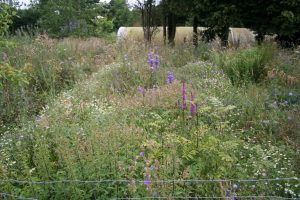
- Wild Gardens once established and weed free of tenacious weeds, are low maintenance, not no maintenance.
- Wild Gardens act as important food and habitat sources for a multitude of creatures, especially when there are other nearby wild spaces.
- Wild Spaces, tend not to be overly tidy, Autumn leaves are not cleared away, bar pathways etc. Tidy spaces are required for most commercially grown ornamental plants that you would buy from a garden centre. Please do not confuse untidy wild spaces with ‘Proper Clean Horticulture’ needed to raise the usual vegetable and flower seedlings without slugs and all the other things that attack seedlings and plants in your precious propagating zone.
- Once established, wildflowers are very hardy, not slug ‘free’ but they fair, far better than most other plants. Wildflowers are in the main frost hardy, however, many hate wet soil, more hate shade, and some even dislike cutting. Please use the filters on this site for species that require dry or wet, sunny or shaded sites. We have also provided a list of those that dislike cutting LINKxxx
- Wild gardens typically choose the ‘right plant for the right place’ requiring less feed, water and attention and most importantly growing well and looking good, usually looking naturally in it’s place.
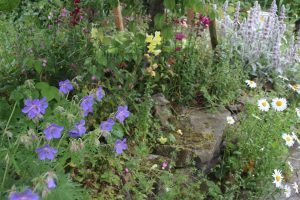
- Nearly all commercial or bred plants can be grown side by side with many wildflowers, as in the above photo, you just have to weed around your non native species as they need care and attention unlike wildflowers.
- Highly bred Garden plants can be ‘Double flowered’ or so pretty and commercialised that they no longer benefit nature or as ecologists say provide ‘ecosystem services’ such as offering pollen and nectar.
- A lot of wildflowers attract predator insects to kill bugs, Everygreen shrubs and conifer tree protect ladybirds in winter.
- Many wildflower spread underground, so knowing your wildflower matters, some are as rampent as scutch grass, luckiley wildflowers tend to keep running and vacate the space they grew in past years for fresher ground. Linkxxx to list
-
In wintertime, few wildflowers bloom into flower, but the wildlife gardener sees winter colour in the visiting birds eating the dead seed heads left in the not-so-tidy wildlife garden.
- Wildflowers unlike cultivated plants are Ideal for New Gardens as they break open clay soil, enrich poor soil and many grow fast to flower. Those in the Pea family, like clover fix nitrogen and release it when cut in flower or when they die.
Wildflower seed is cheaper than even lawn grass seed when all costs are considered, No drainage is required, no fertiliser or lawn chemicals, they self seed and do a bunch of great things for Biodiversity and Climate.
- Wild Gardens allow diseases and pests, but the type and quantity are considered before drastic actions are required.
- Wild Gardens tend to be far tidies nearer the house and wilder away from the house.
- Composting is generally un-nessecary, instead sheet mulch is used and compost materials are spread under trees and large shrubs, we have a compost heap or two, as well as using sheet mulching.
Wild Gardens are typically 90% less work and maintenance than very tidy gardens. Establishing a wild garden can be more work than most gardens, especially when no herbicides are employed.
- Wild Gardens tend not to use any chemical solutions, instead relying on nature to control pest and diseases. When a cure is needed, it tends to be a natural ingredient as opposed to a chemical fix. Chemicals are the last order, if used at all, in a wild garden, they are applied only to the spot with issues and not broadcast over the entire area.
- Chemicals in the wild garden are mostly confined to near by the house, where delicate species of plant may need attention. Slug bait is never used down the garden wild or not. If you need to use slug bait, grow the plant closer to the house for a few years then when large and able to cope with slugs then plant it further away from the area we call the ‘chemically controlled zone’ – yes, gardeners still bleach pathways, disinfect with ‘Jayes’, use vast amounts of chemicals to grow lawns, we say all that should be limited in size and kept near the house, away from the wildlife.
NEW PAGE
Environment Versus Nature, the rules change in a wildflower garden.
Wildplants usually need an ecology to survive in, while lawn, flower bed and under a tree, as found in most gardens are not real ecologies they do in part provide some of the environmental conditions a plant may need. We can create them, often without bother..
- WATER: Record over time where the wet and damp spots are. Photos help remember, After snow, see where it melts last, does ice form over the soil, where are the drip lines off the edges of trees, hedges and shrubs. Where is the rain runoff from the shed going.
No running water? Every gutter downpipe spills or splashes water as it enters the drain, if not concrete, wetland plants will enjoy the moisture. Better still install rainwater barrel or harvester. - Plants that like water tend to also like some fertility, or at least collect carbon /soil/mud around their roots. Many like shade,(usually smaller species) more like sun (usually taller).
- AIR: Fresh air flow, warm summer breezes, Cold spring wind, frost defenses and damaging gusts all create an environment where plant species exploit the local conditions. Generally woodland and shade lovers dont like wind. Many species need frost and cold air flow to enable germination, so they may not germinate next to a warm greenhouse or warm air vent.
- Air movement is essential for insects, for scent to flow from space to space, Butterflies depend on gentle warm summer breezes, Hoverflies are often found on flowers in sheltered places.
- EARTH: these 4 are links flexable sections???
- FIRE: