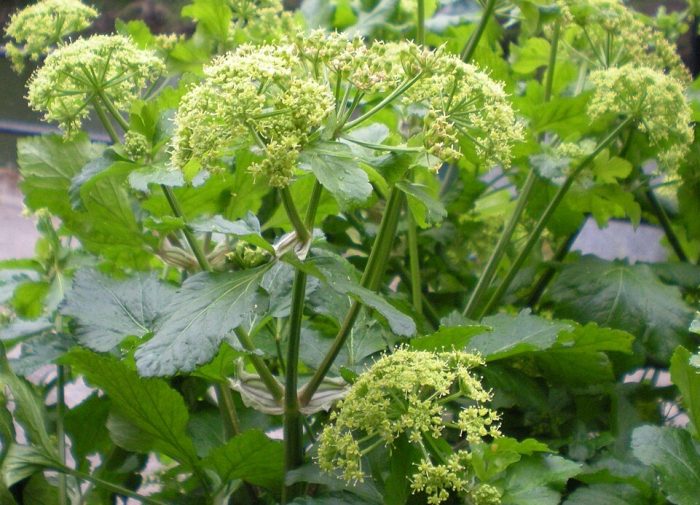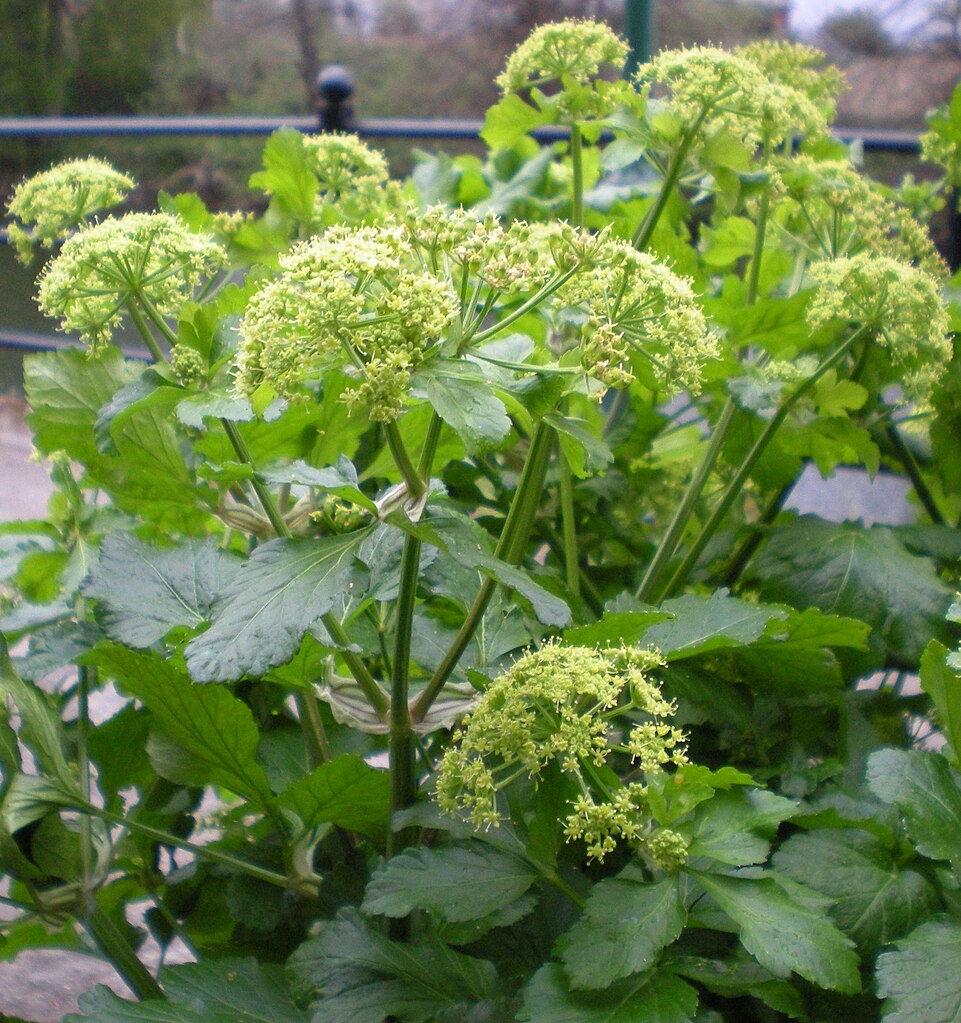
Alexanders

Smyrnium olusatrum
Alex Lockton, CC BY-SA 4.0 , via Wikimedia Commons


Alexanders, Smyrnium olusatrum is an introduced ‘Umbel’ with a deep root. This lovely biennial species, is fast growing and self-seeds freely. We do not add many seeds of this species, if it is listed as included in a seed mixture, (very few) so if you don’t want it, it’s easy to cut off the seed heads and stop it spreading.

Native to the Mediterranean but widely naturalised across Eastern Ireland, especially along coastlines and disturbed ground, we also see it spreading in the midlands. Where conditions are very dry it dominates and spreads, if you need to control it, chop off the seed heads for two years and it will almost disappear.

Alexanders can grow fast and tall, smothering all around, it often flowers about Saint Patrick’s day and makes a great floral display of green and pale yellow flowers.  After flowering the black seeds make a spice and the thick, dried stems make great bug hotels.

Umbels, attract pollinators like bees, flies and hoverflies. They are important in the food chain.

Being Edible, including the roots, young stems, leaves, and seeds, all with celery-like flavour, it’s now grown by wildlife gardeners as a wild vegetable.

Mainly a coastal species, this biennial, dies after going to seed, sometimes the parent plant self-propagates or partially divides before it dies and so the biennial stays in the same place, as a new plant takes over.

Self fertile, hermaphrodite (male and female organs), flowers May and June,

Alexanders in Ireland prefers a well-drained soil. The species tolerates moisture as long as it’s draining away. Avoid waterlogged soils.

Like many biennials, Being tall to 150cm, it will create shade for other species and suppress all other young plants as it grows fast. it dies off by August.

We recommend trying this species in the more wild disturbed urban spaces where weeds are growing, as it is a very early source of food for pollinators, in such cases,  grow or encourage it so that the flowers are in full sun.

Floristry Tip: Cut and dry seed heads just as they flower.

Fibre: Dried stems make great bug hotels.

Food: Leaves great in soup stock and stews. To grow well, adding  mulch or compost, also helps leafy wild crops to grow into ‘chewable’ food crops. Alexanders likes a sunny situation with its roots in partial shade, especially when grown for food, as it’s then far more tender to eat.

Seed: Can be ground to spice.

Germination: Fast

Seed Treatment: Like most biennials, sow as sown as harvested, or within 12 months of harvest.

Storage: Dark, Cool and Dry, no Draughts.

Seed-tray Sowing Depth: 3 x seed size.

Seed Harvest: Cut when seed is jet black, not green/brown

Cleaning: Rub / break apart

A Salt tolerant species, Frost hardy <15c, at <300 metres (ASL) where we have it self-seeding, but restricted.

High winds blew this plant species over on soft newly laid soil.

There is no need to ‘cut back’ this plant, unless you need to restrict it’s growth. Cutting stems before flowering, will delay flowering and provide late summer pollinator food.

Cutting after flowering, but before forming seeds, and the plant may grow back and flower again.

Cut when seeds are formed, after which this plant often dies.

Uncut: It will spread if conditions suit.


Copyright, References & Open Source Text

linkxxx to copyright

Need help choosing the right seed mixtures?

Search and filter mixtures based on your plot size, application, soil type and more!

Irish Wildflower Seeds and Mixes