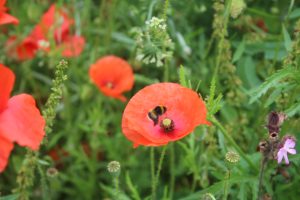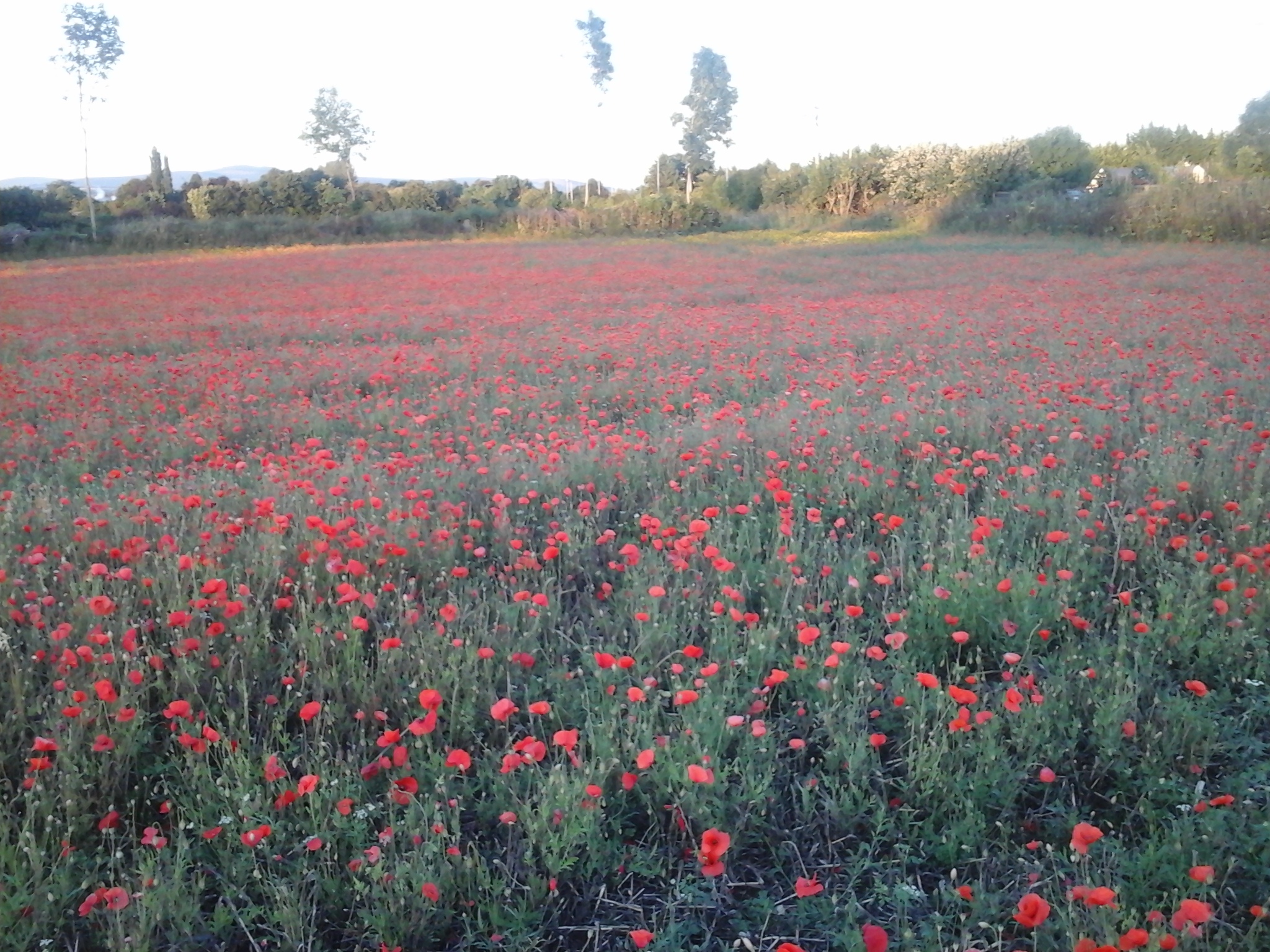
Corn Poppy
Papaver rhoeas
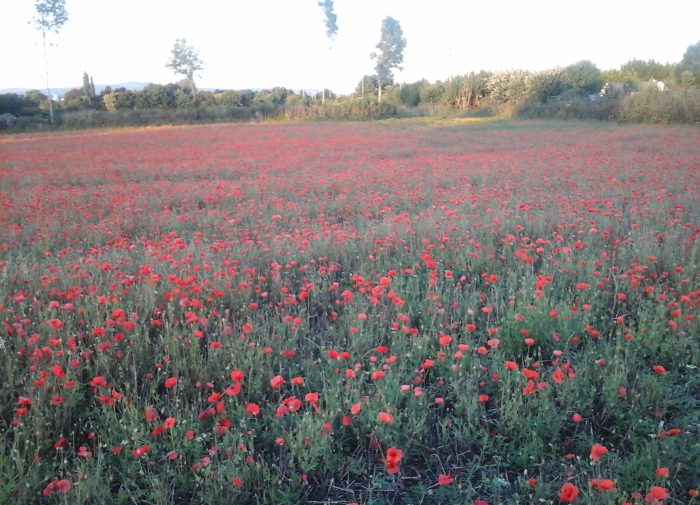
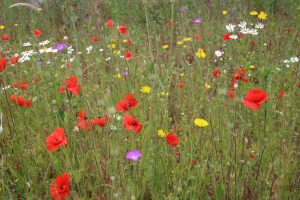
Corn Poppy is an essential part of any annual wildflower mixture or meadow annual nurse crop where the soil tends to be dry and on the limy side. Poppy should be sown before the winter frosts, and if a very severe winter when the seedlings get eaten by birds, re-sow early in the new year.
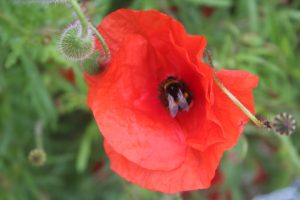
Not considered a true-native, as it only arrived a few thousand years ago, Corn Poppy is a world wide top seller, not only for it’s beauty, but because it’s seed head host arrange of insects who use them as a temporary home to hibernate in or lay eggs. We see specialist birds like Warblers eating the bugs out of the seedheads, often long after the seeds have all been shed from the upright and capped pods.
Poppy and most other annuals attract and support huge number of bug species, especially when left uncut over winter, they provide great habitat for birds and mammals.
FPA’s: (Frequently provided answers) Poppies do not grow in grass, Our red annual Poppies are not perennial, (some commercial species are).
Yes, Slugs eat Poppy seedling. No we don’t smoke them. Yes, the plant upsets some people, most customers love them.
Management: None. Do not cut unless weedy, allow to set seed
Tolerance of cutting: None.
Cutting time: None
Life Cycle (Form): Annual
Flower Height: 20 to 50 cm
Foliage Height: 5 – 10 cm
Flower Colour: Red
Flowering period: June, July, August,
Time to Flower:4 -6 months
Soil Type: Most, best in deep dry, light and rich soil.
pH Type: Neutral, Alkaline
Moisture: Dry,
Aspect: Full sun
Wildlife Value: Low, Dead flower heads over-winter important insects
Edible , Seeds for bread