Design By Nature – Registered Wildflower Seed House – Product Detail Page :
Conservation Grade – Native Irish Origin Landraces – Wildflower Seed Mixture
Supporting the very best wildflower seed mixtures produced in Ireland
DW01 Short Flowering Wild Meadow
Count : 30 + Low growing, neath and tidy Species, pollinator perfect, Great value and 3 year Guarantee to Grow
Long-term herbaceous Perennials :
Birdsfoot Trefoil, / Cowslip, / Lady’s Bedstraw, / Marjoram, / Meadow Buttercup, / Ragged Robin, / Red Clover, / Ribwort Plantain, / Rough Hawksbit, / Salad Burnet, / Selfheal, / Saint Johnswort, / Smooth Hawksbit, / Tufted Vetch / White Bedstraw, / White clover, / Yarrow,
Short-term Perennials : Black Medic, / Common Sorrel, / Kidney Vetch, / Ox-Eye Daisy,
Meadow-Annuals : Common Centaury, / Yellow Rattle, / Eyebright, / Red Bartsia,
Biennials : Kidney Vetch, / Wild Carrot,
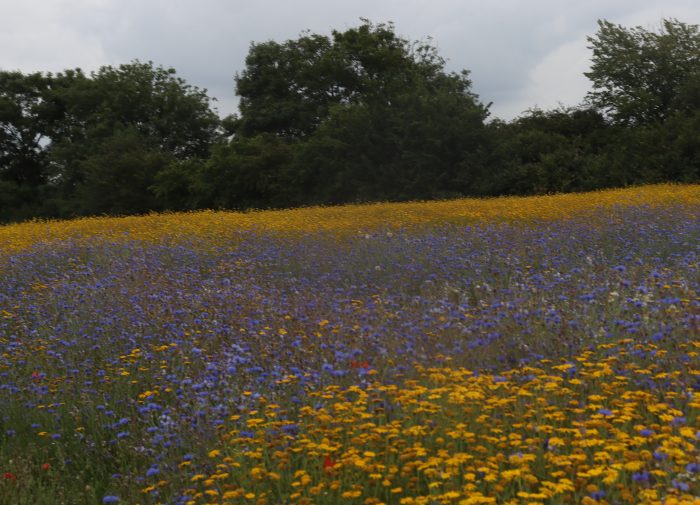
‘Nurse crop’ Cornfield Annuals : Corn Marigold, / Corn Poppy, / Cornflower, / Scentless Mayweed,
Re-introduced species : n/a Xenophytes : Musk Mallow,
Long-term Perennials don’t often flower until 3rd year
BUY DW01
Stock Level ? Optimal Stock, Usually enough in stock to meet routine demand
Seeds Per Gram : 1800 – 2400
Performance :
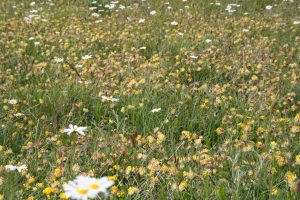
Design By Natures short cut floral lawn, flowers for much or the growing season. It’s very colourful, acts as an edge between grass paths and taller meadows. It’s perfect around houses as it looks and acts like a lawn when not flowering over winter. You can sow other low maintenance species such as Dwarf Bulbs which are are ideal for introducing into the short cut law.
Experience Wildflowers
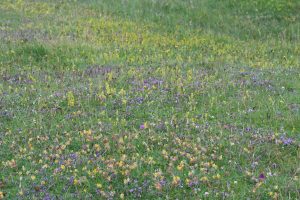
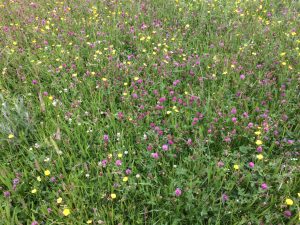
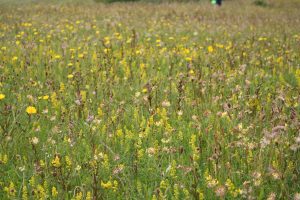
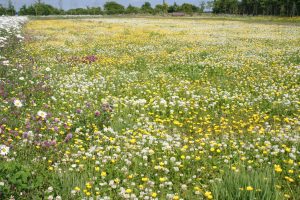
Click image to OPEN best quality DW01 photo
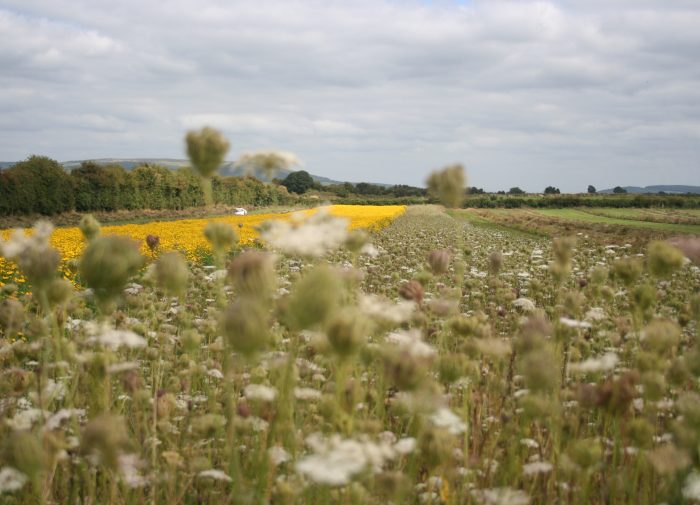
A photograph can only show one day in the life of a meadow. Images cannot show the daily or seasonal changes. As every image is subjective and dependent to the light level and angle of sunlight. No one image is every the same or a true representation
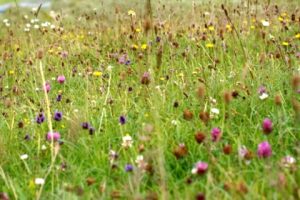
Morphology :
Adaptability : Needs open exposed site, Ideal for light soils with a pH between 5 and 8.5, suitable for normal to moist conditions (avoid waterlogged areas, especially soils remaining wet in summer)
Aspect : Sunny, dislikes any shade.
Moisture Range : Dry to Very dry, dislikes wet soil , tolerated moist soils
Height Range : Short Cut 20 to 50cm.
pH Range : Suits all soil, bar very wet
Fertility Range : Will grow on any soil, the less fertile the soil, the less cutting will be required
Wintergreen Presence : Good, greenery persists through winter months.
Tolerance of Cutting : Good, only in second year+.
General Cutting Time : Spring, Mid Summer and at the end of Summer
Persistence if not-managed : Low. Persistence demands an annual cut and the cut material removed and occasional ‘Gaps’ need to be created.
Disposal of cut materials : Always remove the cuttings, wildflower meadow hay should be removed as soon as possible before rain soak the materials and make it difficult to ‘lift’. Materials should not be heaped on site as it will grow mouldy (a health risk). Meadow cuttings can be spread as compost in sheet mulches around trees and shrubs or composted.
Fertiliser :None required
Watering : None required, they grow when conditions are ‘right’, watering wildflowers just encourages site weeds.
Maintenance :
In the first year, do not cut until August or September or later to allow the annuals to finish flowering, then ‘strim’ away the taller annual growth. In year two, cut to maintain as a lawn. By year 3 use a mower, (not mulch mower) to keep the meadow short, the aim is to allow three main flowering periods from May to early June, from late June and July and again in Autumn. Between each flowering phase the lawn needs to be cut. After the annuals flower in the first year, In subsequent summers, cut every 4 to 8 weeks depending on how fertile your soil.
Floral lawns will require cutting every 4 to 6 weeks when growth reaches 10cm or just before a flush of flower is finished. You should remove the cuttings.
Set the mower to the highest setting, cut and then re-cut with the mower setting down to about 10cm.
The aim is to keep the flora short and by regular cutting to encourage it to flower.
If using Mulching Mowers rake the soil very well at the end of the season to remove all the dead debris.
100% Native Origin Wildflowers – Authentic Wild Landraces of Irish Sourced known Provenance. On Wildflowers.ie – Design By Nature goes the extra mile and delivers the world best wildflower growers information for all of Ireland’s, Irish Wild Flower Growers and Gardeners